

What is a plea bargain? A prosecutor offers to reduce a charge or recommend a lighter sentence, and the defendant pleads guilty to avoid trial. The judge still has to accept the plea and decides the sentence.
Picture a defendant who is told that a lesser charge is on the table if they admit guilt before trial begins. The offer can be tempting, but it comes with conditions, a deadline and a judge who is not bound by it. This guide sorts out the common misunderstandings and shows where the deal sits among the criminal justice process steps.
What a plea bargain is and how it starts
A plea bargain is an agreement between a defendant and a prosecutor. Cornell’s Legal Information Institute describes plea bargains as agreements in which defendants agree to plead guilty in return for concessions. The Justice Department’s plea bargaining guidance puts the government’s side plainly: it may offer the defendant a plea deal to avoid trial.
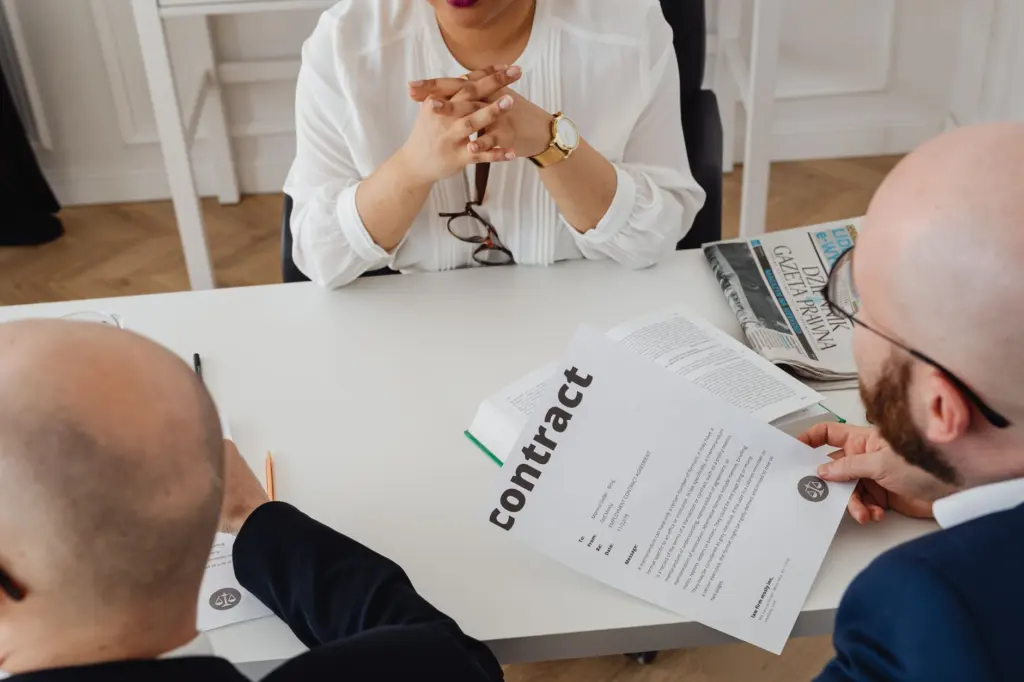
The deal is not a loophole and not a favor. It is a negotiated way to resolve charges without a trial, and both sides give something up. Before a case reaches this point it has to get through earlier screening, which is covered in the comparison of grand jury vs preliminary hearing.
The prosecutor’s side
The prosecutor holds the offer. Cornell notes that prosecutors usually agree to reduce a defendant’s punishment, which in practice means fewer or less severe charges, or a recommended reduced sentence. The San Mateo County District Attorney’s office explains that in a typical meeting the deputy district attorney advises the defense which charges the defendant must plead to.

The defense attorney’s side
The defense attorney receives the offer, explains it and negotiates its terms. A defendant who weighs a deal without counsel’s explanation is relying on a one-sided summary of what they would give up and receive. Counsel’s practical job is to compare what the offer promises with what the judge is free to do, which the next sections lay out.

Plea bargain misunderstandings at a glance
Most confusion comes from treating a plea deal as either a guaranteed discount or a casual shortcut. The table contrasts four common beliefs with what the evidence supports.
| Common belief | What actually applies | Planning use |
|---|---|---|
| A defendant can plead guilty to get a better outcome whether or not the charge is true | A defendant may only plead guilty if they actually committed the crime, and the admission is made in open court before a judge | A plea is a sworn-style admission, so discuss the facts candidly with the defense attorney first |
| The prosecutor decides the sentence | The judge is the only person authorized to impose a sentence, and federal judges are not bound by prosecutors’ recommendations | Treat a promised recommendation as a recommendation, not a guarantee |
| A plea deal costs nothing but the conviction | Defendants waive three rights protected by the Fifth and Sixth Amendments | Weigh the offer against what a trial would have offered |
| An offer stays open until the defendant is ready | Both the deputy district attorney and the judge can set an expiration date for the offer | Ask early how long the offer lasts |
The Justice Department’s plea bargaining page and Cornell’s plea bargain summary support the first three rows, and the San Mateo County District Attorney’s office describes the expiration of offers.
What the defendant gives up
A plea bargain is not a free exchange. Cornell explains that plea bargaining requires defendants to waive three rights protected by the Fifth and Sixth Amendments: the right to a jury trial, the right against self-incrimination and the right to confront witnesses. Giving up these rights is what makes the deal efficient for the government, and it is why the process is regulated.
- Voluntary and knowing. The Supreme Court has held that guilty pleas must be voluntary, and the defendant must understand what the plea means. A deal accepted under confusion or pressure is exactly what this rule is meant to prevent.
- Truthful admission. The Justice Department says a defendant may plead guilty only if they actually committed the crime. That limit protects the integrity of the conviction.
- Sentencing still follows. The Justice Department adds that after a guilty plea there is no trial, but the next step is to prepare for a sentencing hearing. The case is not over when the plea is entered.
Guilty versus no contest
A defendant may choose to plead guilty or no contest to one or more charges rather than go to trial, according to the San Mateo County District Attorney. Both pleas let the case resolve without a trial, and both sit inside the same bargain: the defendant gives up trial rights in exchange for a negotiated result.
The difference lies in what the defendant says. A guilty plea is a formal admission that they committed the crime. A no contest plea declines to contest the charge. The supplied evidence describes the guilty plea in detail and treats no contest as a parallel option, so the consequences beyond the criminal case are something to settle with a defense attorney who knows the local court and the specific charge.
How common pleas are
Pleas are the usual ending, not the exception. The San Mateo County District Attorney states that most criminal cases are resolved by way of a plea agreement. That is why plea bargaining is best understood as a core part of how courts process cases, not as a rare event.
A precise percentage depends on the court system and year. Federal and state counts differ, and published statistics from agencies such as the Bureau of Justice Statistics are the place to look for an exact share. What the evidence here supports is the direction: when a case ends in a conviction, a plea is the more likely route than a verdict after trial. The trial path itself is laid out in the stages of a criminal trial.
The judge’s role and sentencing
The judge, not the prosecutor, controls the final outcome. The Justice Department states that the judge is the only person authorized to impose a sentence, and a defendant who pleads guilty agrees to be sentenced by the judge. Cornell adds that federal judges retain final authority over sentencing decisions and are not bound by prosecutors’ recommendations.
In practice this shapes how a deal is built. In San Mateo County, the judge may meet with the deputy district attorney and defense counsel in chambers. The judge then reviews the case and considers aggravating and mitigating factors before stating the sentence they would impose. Aggravating factors make a sentence heavier and mitigating factors make it lighter, so the defense attorney’s work includes presenting the mitigating side clearly.
- Who it helps. A defendant with a weak defense or serious trial exposure may value certainty more than a verdict.
- When to wait. A defendant who has not yet reviewed the evidence with counsel gains little by rushing, particularly if the offer deadline allows time.
- What to ask. Ask whether the sentence is fixed by the judge or only recommended by the prosecutor.
Deadlines, withdrawal and breach
Offers do not last forever, and a plea is not freely reversible. The San Mateo County District Attorney notes that both the deputy district attorney and the judge can set an expiration date. That makes timing part of the decision: waiting for more information can cost the offer.
Withdrawing a plea is a different matter from letting an offer lapse. The supported route in the evidence is a breach by the prosecutor. Cornell explains that if a prosecutor reneges on a plea bargain, the judge might let the defendant withdraw the guilty plea. That is a remedy a judge may grant, not an entitlement, and the rules for other withdrawal reasons vary by court. A defendant who wants to reconsider should raise it with their defense attorney immediately, since the court’s own rules set the timing and conditions.
Frequently asked questions
| Question | Answer |
|---|---|
| When are plea deals usually discussed? | Most commonly relatively early in the court process, according to the San Mateo County District Attorney, such as at a pretrial conference or a Superior Court review hearing. |
| What happens after a guilty plea? | There is no trial. The next step is preparing for a sentencing hearing, per the Justice Department. |
| What share of cases end in pleas? | Most criminal cases are resolved by a plea agreement, as the San Mateo County District Attorney puts it. An exact percentage varies by jurisdiction and year. |
| Can a plea be withdrawn? | Sometimes. If a prosecutor reneges on the bargain, Cornell says the judge might allow the guilty plea to be withdrawn. Other grounds depend on the court’s rules. |