

| Situation | What happens | Planning use |
|---|---|---|
| You can speak safely | A voice call from a mobile phone usually gives the call center your phone number and approximate location automatically. | Call 911 rather than text. The call carries information a text may not. |
| You cannot place a call | New York City tells residents to call 911 if they can and text only if they can’t. | Treat texting as the fallback, not the default. |
| You send a text | The call taker may not receive your phone number or location. | Put your full address in the first message. |
| You write the message | Operators ask for the reason for the emergency, and for you to say if you are Deaf. | Open with the place and the problem, in plain words. |
These points draw on the New York City text-to-911 page and Warrenville Fire’s text-to-911 notice.
Can you text 911? Yes, where your local 911 center accepts texts, but call whenever you can speak safely. Texting is the fallback when a call is not possible, and your first message must carry your location.
A working phone plan is only one part of readiness. For the wider picture, including how to make your home safer from burglars, start with the neighborhood and home safety guide, then come back here to set up your emergency routine.
Call first, text when you cannot
The decision rule is simple and comes straight from a local 911 program. New York City’s guidance reads, “Always call 911 if you can. Text only if you can’t.” The reason is practical. A voice call from a mobile phone usually passes your phone number and approximate location to the call center automatically, and a text may not do either.
That difference should shape what you do in the first seconds of an emergency. If you can speak, speaking is the better route. If speaking or placing a call is not possible, a text is a legitimate way to reach help, but only if you accept that you are now responsible for telling the dispatcher where you are.
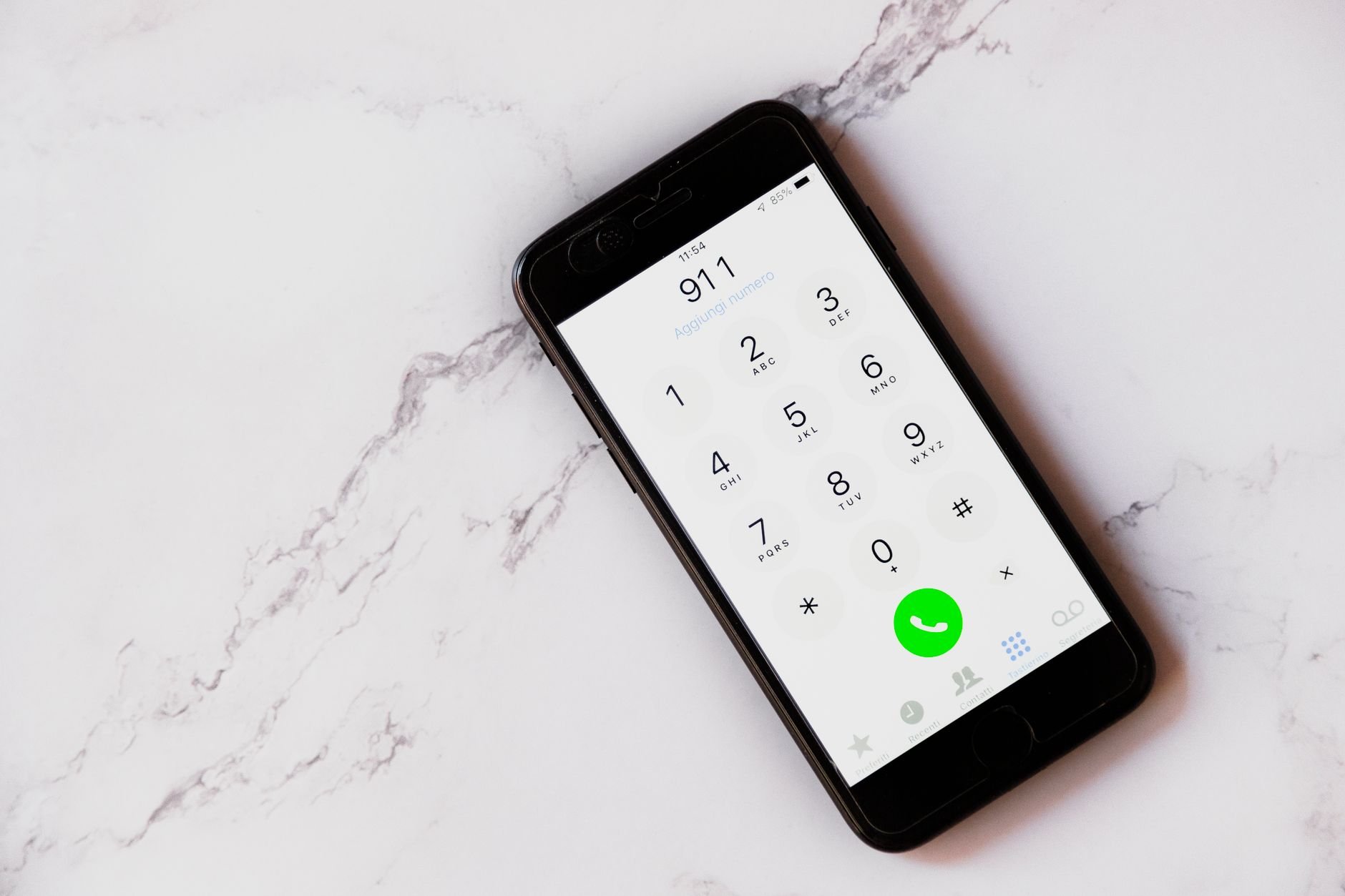
Choosing between a call and a text
- You can speak safely. Call 911. You get the automatic number and approximate location that a voice call usually delivers.
- You cannot speak or cannot place a call. Text 911, and give your location in the first message. This is the situation the New York City guidance reserves texting for.
- You are on a cell phone without a texting plan. Warrenville Fire notes that you can only send a text to 911 from a cell phone with an active texting plan, so check that your plan includes texting before you ever need it.
What you give up when you text
Texting changes what the dispatcher knows about you before you type anything. Warrenville Fire warns that when you text 911, the call taker may not receive your phone number or location. The same notice states that text GPS location information is not equal to current wireless location technology. In other words, the location technology behind a voice call is stronger than whatever accompanies a text.
This answers a common worry: does 911 know your location from a cell phone? On a voice call, usually yes, in approximate form. On a text, you should not assume it. Treat the address you type as the main location source, not a backup, because the dispatcher may have nothing else to work from.
Practical consequences
- Your first message does the work of the whole call. A dispatcher who receives only “help” may not know where to send anyone, so location comes before explanation.
- Approximate does not mean exact. Even on voice calls the location is described as approximate, so naming a street address, cross streets or a landmark remains worthwhile whichever way you reach 911.
- Wording matters more. The service accepts words only, so what you type is the entire picture the dispatcher gets.
What to put in your text
Dispatch centers and local 911 programs agree on the core content: where you are and what is wrong. The details below combine guidance from New York City and the North Central Texas 911 district, so follow your own local center’s instructions if they differ.
The first message
Enter 911 as the recipient without spaces or hyphens, as New York City instructs. Then write your location before anything else. NYC asks you to text your full address and cross streets, if available, and the borough. The North Central Texas 911 district says to include your location information in that first text so telecommunicators can dispatch help, and to state the service you need. Where your area does not use boroughs, the principle still applies: name the exact place and the town or city.
The details that follow
After the location, state the reason for your emergency in a short, plain sentence, such as a fire, an injury or a break-in. NYC’s instructions also ask Deaf texters to let the operator know, so say so in the message if it applies to you. Keep the wording simple, since a dispatcher is working from your words alone.
What to leave out
- Group chats. New York City says not to text 911 in a group chat. Send the message on its own to 911.
- Photos, videos and GIFs. The service accepts text, and one overview of the service notes that it accepts words, not images or videos.
- Emojis. NYC lists them alongside media among the things not to send. Describe what is happening in words instead.
How availability and location work behind the scenes
Text-to-911 is not a single national switch that works identically everywhere. The 911 call centers, known as Public Safety Answering Points, are in charge of implementing text-to-911 in their own areas. Local centers, not the FCC, run the service day to day, so whether your text is accepted depends on where you are and which center covers that spot.
Checking your own area
The practical step is to look at the website of your local 911 center or county 911 program. North Central Texas 911, for example, publishes a page on where texting works within its region. If your center does not offer texting, calling remains the route to help.
Voice location versus text location
A mobile voice call arrives with automatic information. Warrenville Fire says the call center will usually receive your phone number and approximate location. A text arrives mostly as words, and the call taker may not receive either piece of information. That gap is why the advice above puts your address at the start of the first text instead of leaving it for later.
Getting ready before an emergency
Texting under stress goes better when the information is already written down. A readiness routine does not need to be elaborate, and it should be somewhere every member of the household can see.
- Post your emergency contacts. Keep a printed list of local emergency numbers, plus family and neighbor contacts, on the refrigerator or another visible place.
- Write out your address. Include cross streets, since NYC asks for them when available. A note near the phone saves time for guests, children and anyone unfamiliar with the home.
- Confirm your plan. Make sure the phones in your home have an active texting plan, because a text cannot be sent from a cell phone without one.
- Look up your center. Find your local 911 center’s page on text availability so you know what to expect.
Emergency readiness also sits alongside everyday prevention. Guides such as parking lot safety tips and how to prevent package theft cover the habits that reduce the chance you will need to contact 911 at all.
Frequently asked questions
Is text-to-911 free?
New York City says text-to-911 is free and works through short message service (SMS) with cellular carriers. It also requires a text or data plan.
What does a bounce-back message mean?
If text-to-911 is not available where you are, you will receive a bounce-back text asking you to call 911 instead, according to the North Central Texas 911 district. Place a voice call when you see it.
Do most people contact 911 by cell phone?
In the North Central Texas 911 service area, about 85% of people reaching out to 911 do so with a cell phone. That is why location handling on mobile devices matters so much.